Skip to content
(81) 3299-9913 Monday to Friday, 8 am to 5 pm (Brasília time)
Blueground Airport Services
ENPTPortuguêsENEnglishESEspañol

Airport Maintenance

Rubber removal, friction measurement and pavement retexturing at airports throughout Brazil, supporting maintenance and monitoring under the applicable RBAC 153 requirements.

  • 100,000+ m²of rubber removed
  • 100+friction measurements
  • ARC-1600 and Mu Meterstate-of-the-art equipment
  • RBAC 153compliance support

Runways with grip, safer operations

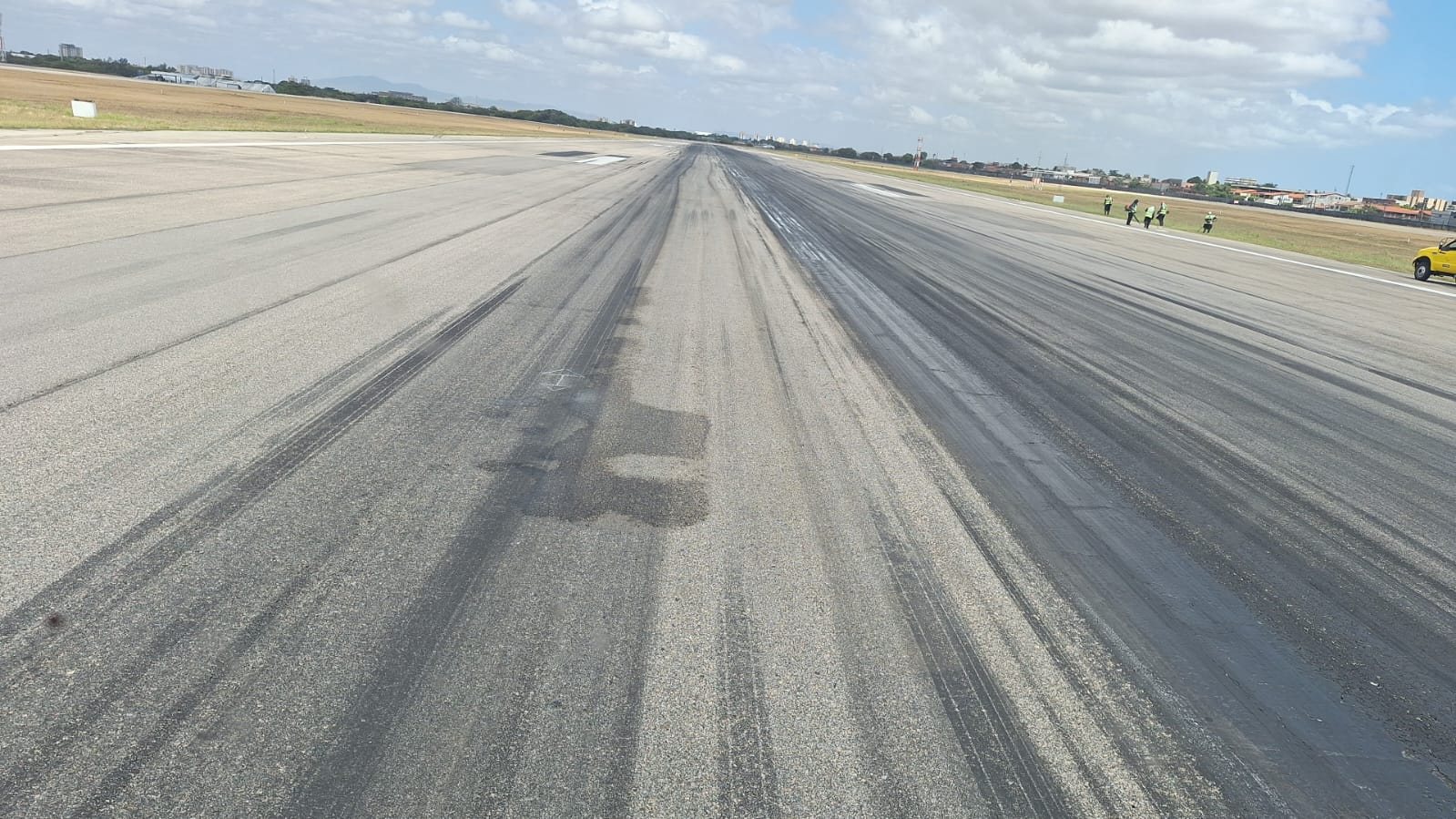
Over time, runways lose grip because of rubber build-up from tires, contaminants such as oil and wear of the pavement texture. Blueground removes rubber, cleans and retextures pavements and measures the friction coefficient, helping airport operators meet the maintenance requirements of ANAC’s RBAC 153 (the Brazilian aerodrome regulation).

Service all over Brazil. We take our team and equipment to airports in any region of the country, scheduling the work around each airport’s operating window.

A benchmark across Brazil

In just three years since our founding, Blueground has become a nationwide benchmark for these services, with a reputation built on commitment and an unwavering focus on safety.

100,000+m² of rubber removed from runways
50,000+m² of pavement markings removed
50,000+m² of pavement retextured
100+friction measurements carried out, over 50 of them in 2026

Cumulative totals since the company was founded.

Services

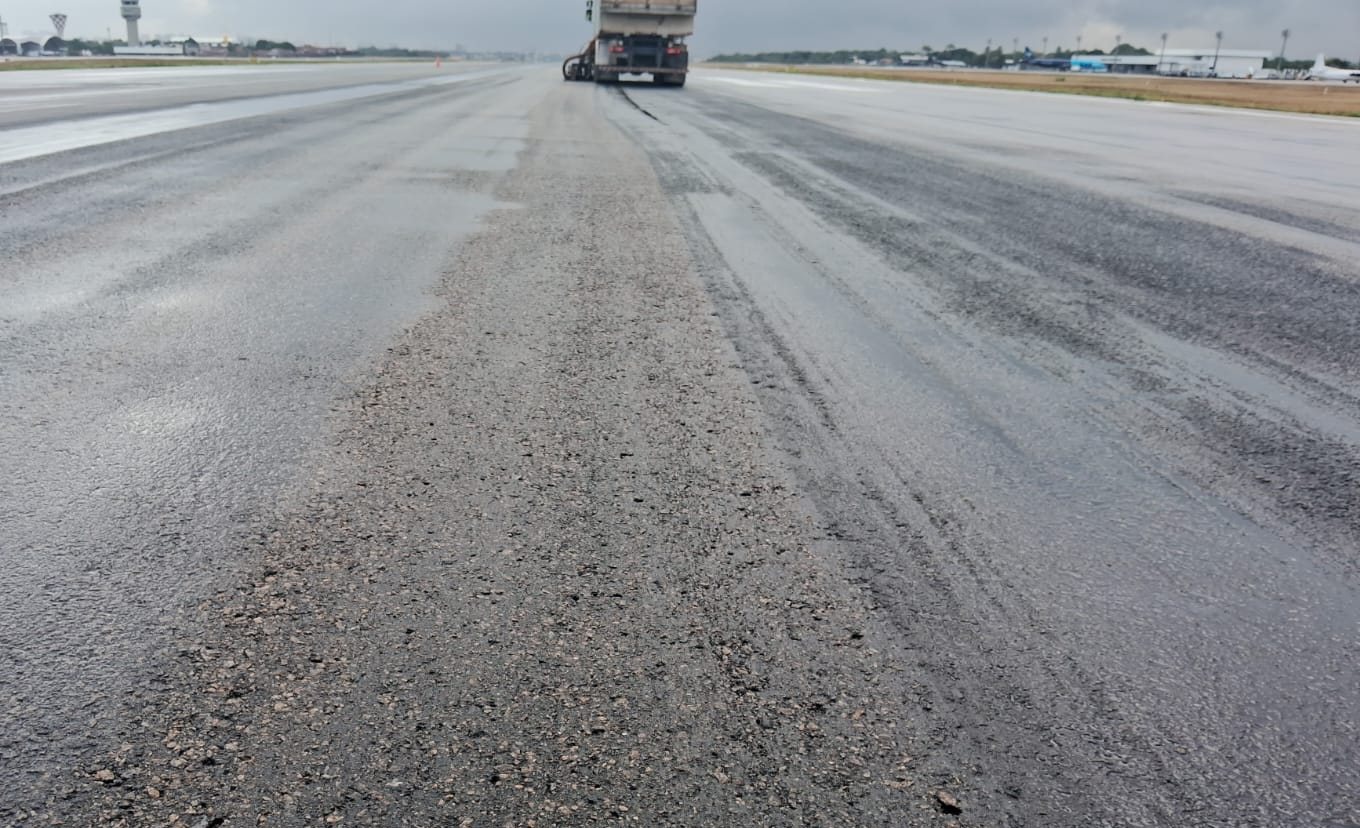
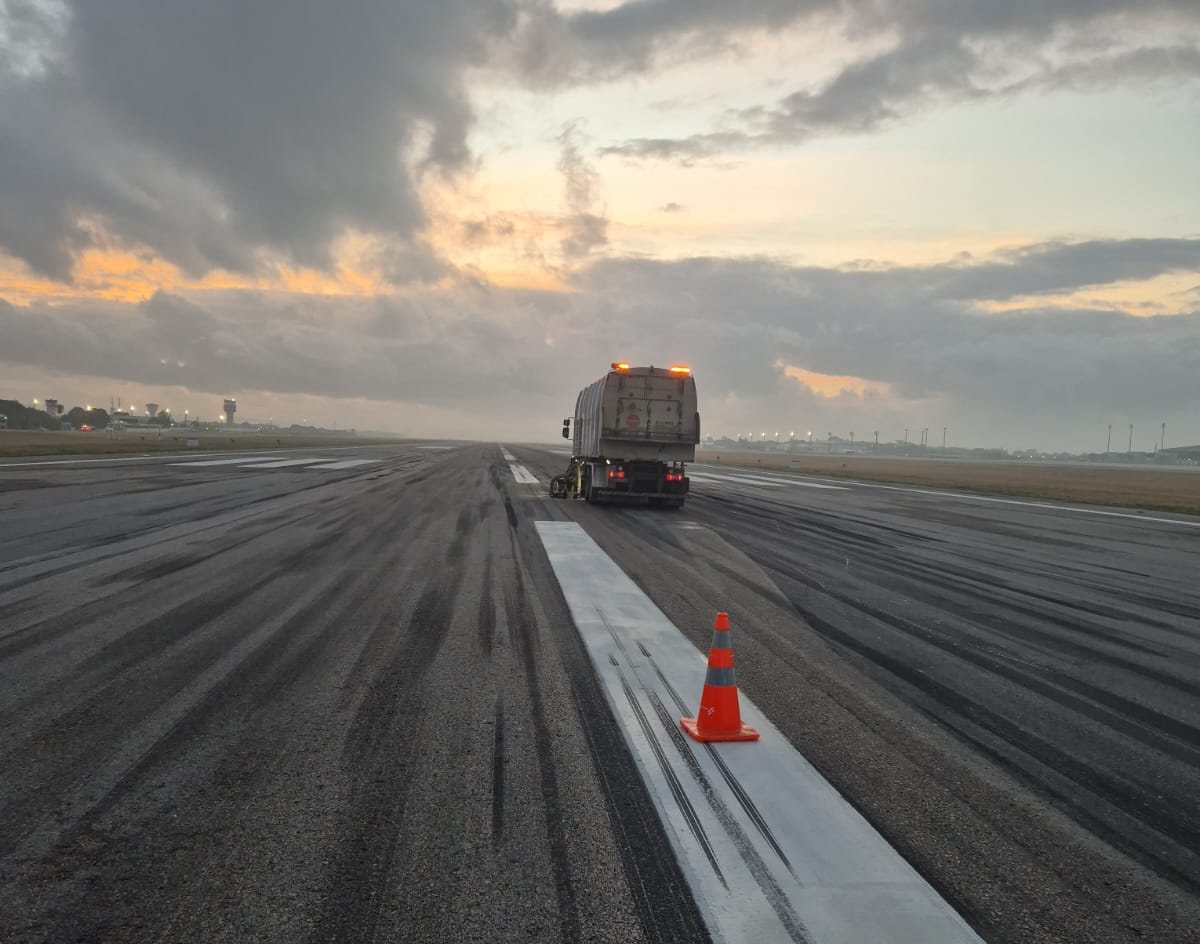
  • Rubber removal on runways by water jetting, restoring runway grip.
  • Pavement retexturing, restoring surface friction (grip).
  • Oil removal on aprons and runways.
  • Removal of pavement markings with the ARC-1600, preserving the integrity of the pavement.
  • Cleaning, maintenance and washing of large areas.
  • Friction coefficient measurement and macrotexture and microtexture testing of pavements (macrotexture by the sand patch test).

Equipment

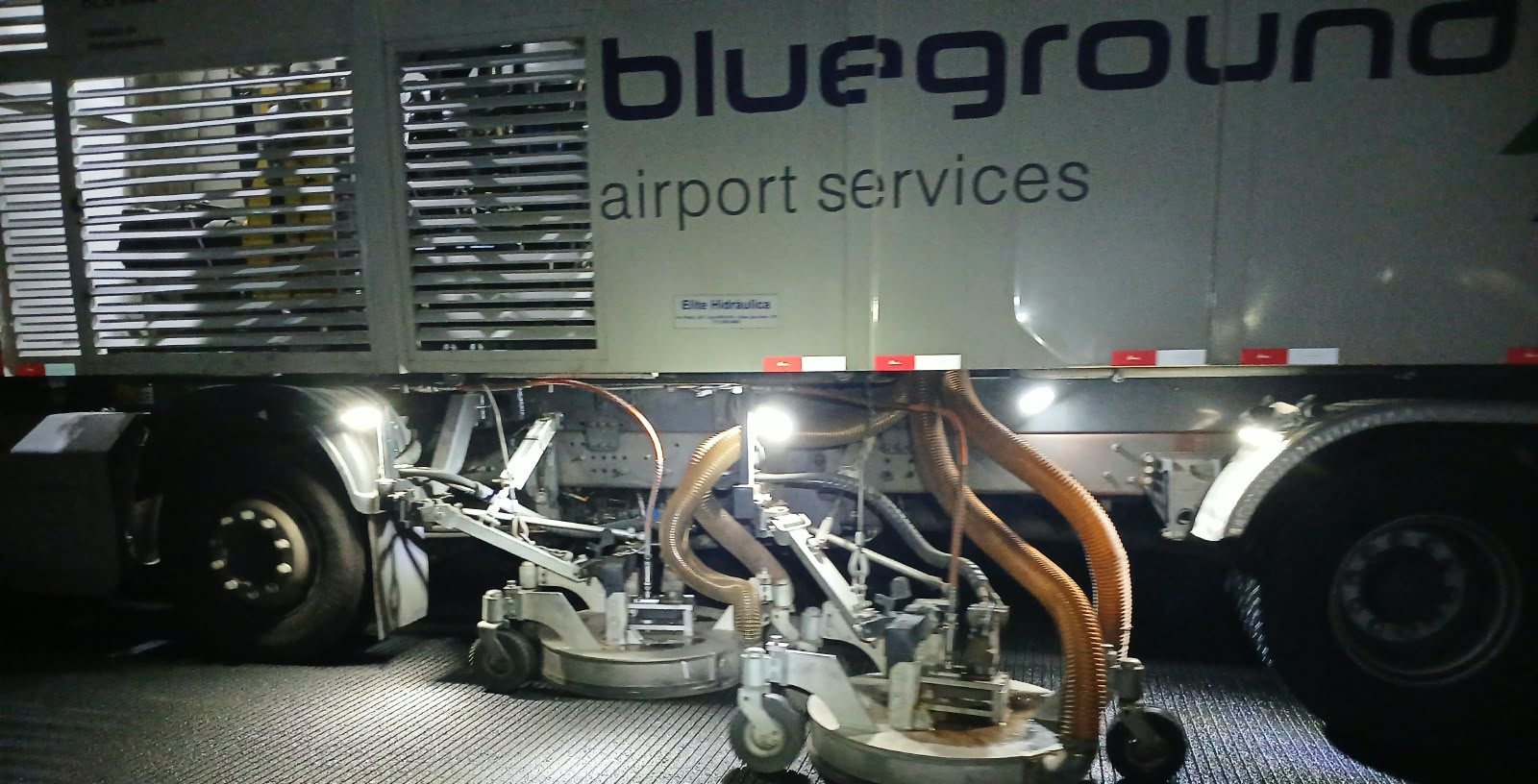
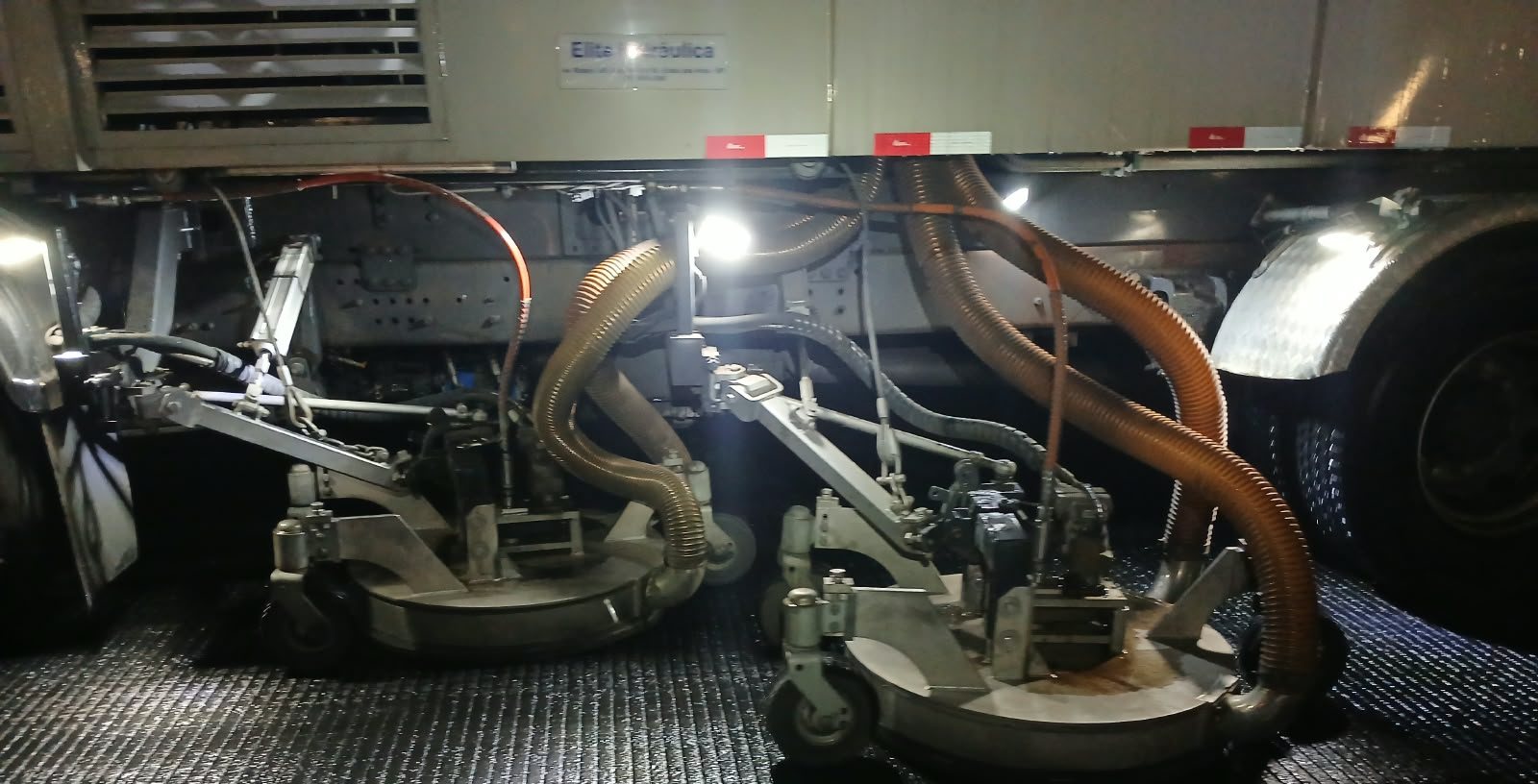
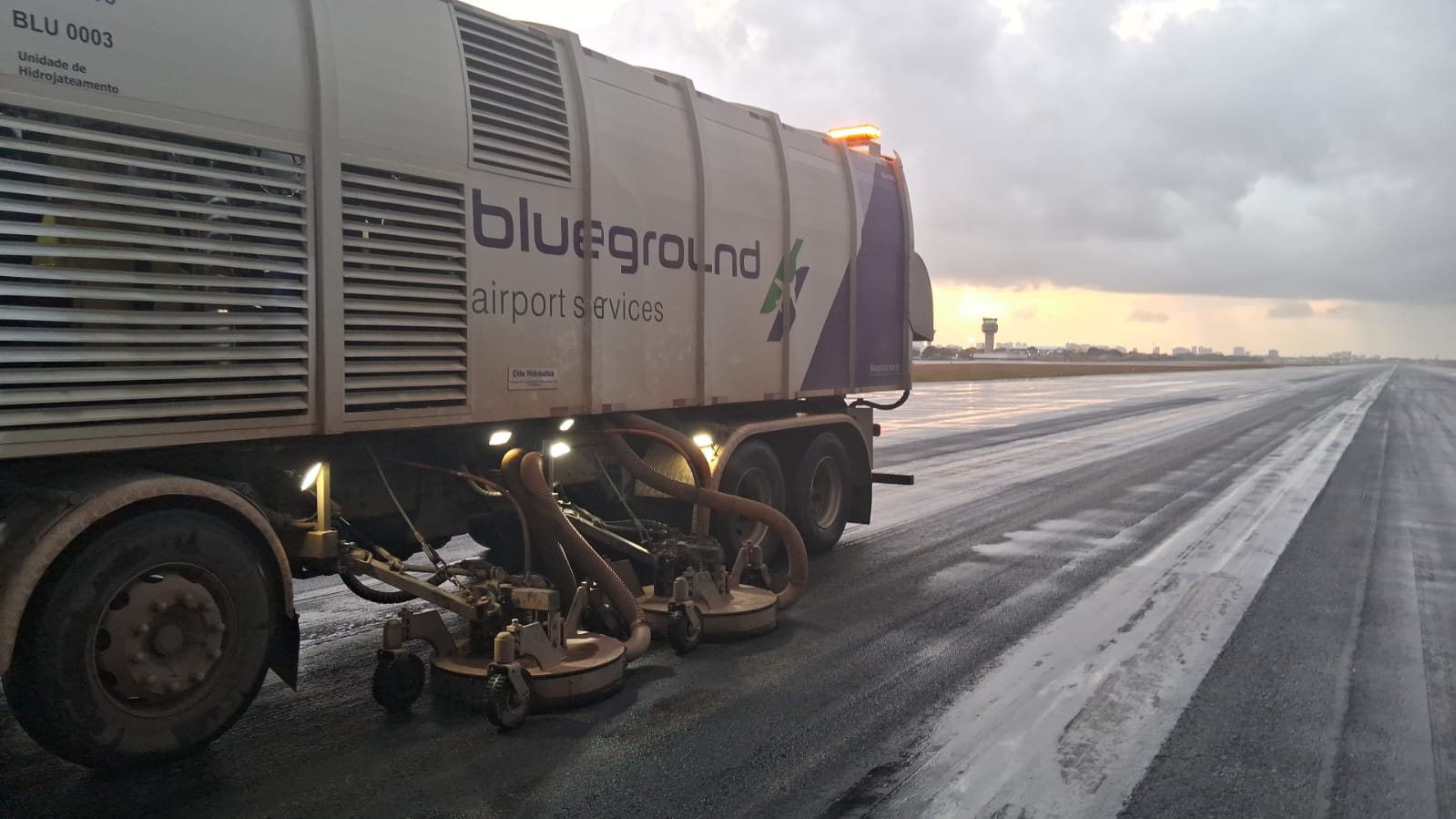
We operate the ARC-1600, a state-of-the-art water jetting unit whose parameters can be adjusted to each job, ensuring efficient and safe maintenance of airport surfaces.

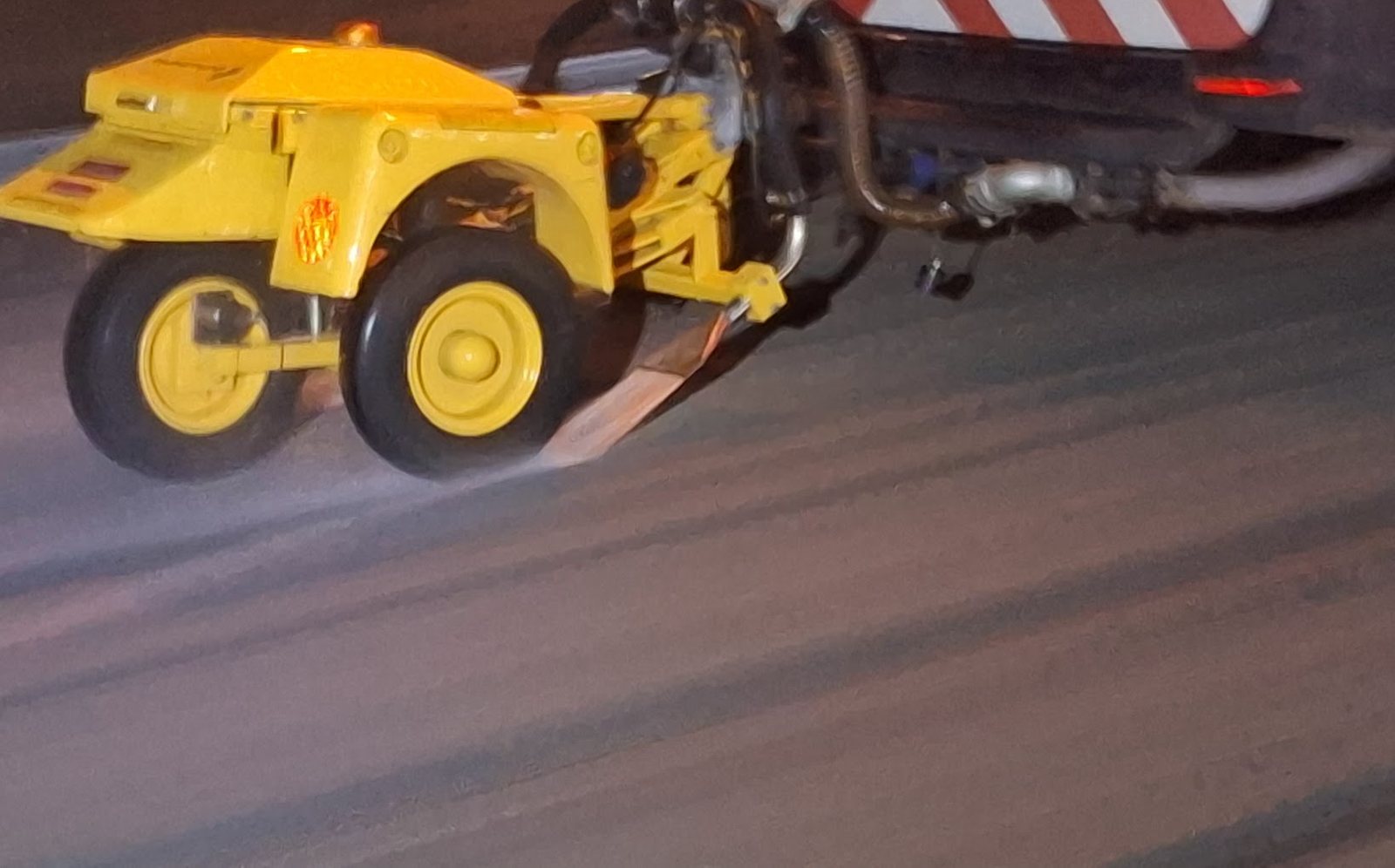
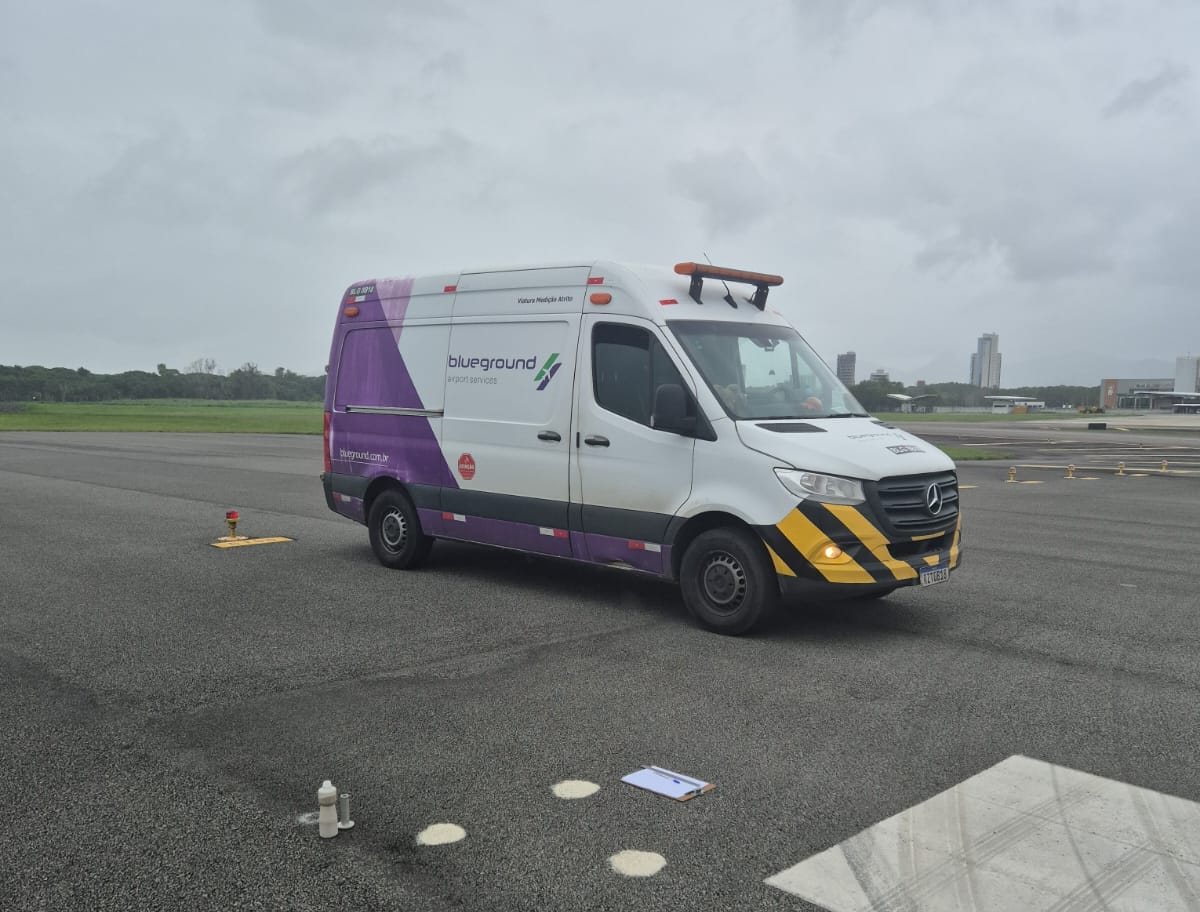
For friction measurement we use the British-made Mu Meter, with a trained, specialized team, to ensure accurate and reliable results.

See it in operation

ARC-1600 in operationBlueground's ARC-1600 water jetting unit in operation on the runway.When you play it, the video is loaded from YouTube.
Friction coefficient measurementMeasuring the friction coefficient of airport runway pavements with the Mu Meter.When you play it, the video is loaded from YouTube.

See Blueground's YouTube channel

How we work

  1. Assessment: evaluation of the pavement and its friction condition.
  2. Planning: work scheduled within the operating window agreed with the airport.
  3. Execution: equipment parameters adjusted to each type of job, preserving the pavement.
  4. Verification: friction measurement to prove the result.
Technical reference · ANAC

What IS 153.205-001D says about runways

Revision D of IS 153.205-001, approved by Regulatory Ordinance No. 48/SIA on July 16, 2026, details how RBAC 153 applies to longitudinal irregularity, friction and macrotexture. These criteria help operators plan measurements and track results.

Friction · Mu-meter

Table 2 of the IS ties the levels to test conditions: tire pressure of 70 kPa and simulated water depth of 1.0 mm. A 2.5% tolerance is allowed.

  • 65 km/h · maintenance / minimum0,52 / 0,42
  • 95 km/h · maintenance / minimum0,38 / 0,26

The equipment must be checked and calibrated according to the manufacturer, record data at intervals no greater than 10 m, and measurements must be attested by a qualified technical professional.

Macrotexture · sand patch method

The required average depth for an operational runway is at least 0.60 mm. The IS specifies measurements 3 m from the centerline, alternating sides every 100 m, with at least 3 readings per area.

For each measurement, the operator must submit to ANAC the report specified in Appendix C of the IS.

When results fall below the threshold

Friction below the maintenance level requires notifying ANAC of planned or completed actions. Below the minimum level, the IS specifies operational safety measures, pavement recovery and a request for aeronautical information identifying sections that may be slippery when wet.

For macrotexture below 0.60 mm, actions must be reported and drainage assessed; the IS specifies checking for water deeper than 3 mm in a central area measuring 150 m × 12 m.

Fines under RBAC 153

O Apêndice B lista valores por dispositivo e constatação. O enquadramento depende do requisito e do processo administrativo; não há multa única automática para qualquer ocorrência.

  • System (153.201)R$ 1.050,00 a R$ 10.500,00
  • Pavement/runway (153.203/205)R$ 1.050,00 a R$ 21.000,00
  • Works (153.225, .227, .229)R$ 5.250,00 a R$ 10.500,00

Frequency and applicability vary by aerodrome classification and operation. “FC” items in the IS are mandatory unless an alternative means is approved in advance by SIA. Monitoring, risk assessment and report submissions to ANAC remain the operator’s responsibility. Define the equipment, test, technical responsibility and data deliverables in the service scope.

Contract scope follow-up

More than a service provider: your operations partner.

We align the required service, suitable equipment, execution conditions and operational window with the operator. We stay close to delivery so the contracted work fits the airport’s day-to-day operations.

  • Scope and priorities defined with the operator
  • Equipment and technology suited to the service
  • Execution aligned with the operational window
  • Clear communication on progress and deliverables
Talk to Blueground

Is your maintenance aligned with RBAC 153?

Tell us which service and which airport you need. Our team will get back to you with a proposal.

Request a proposal