Why rubber builds up on the runway
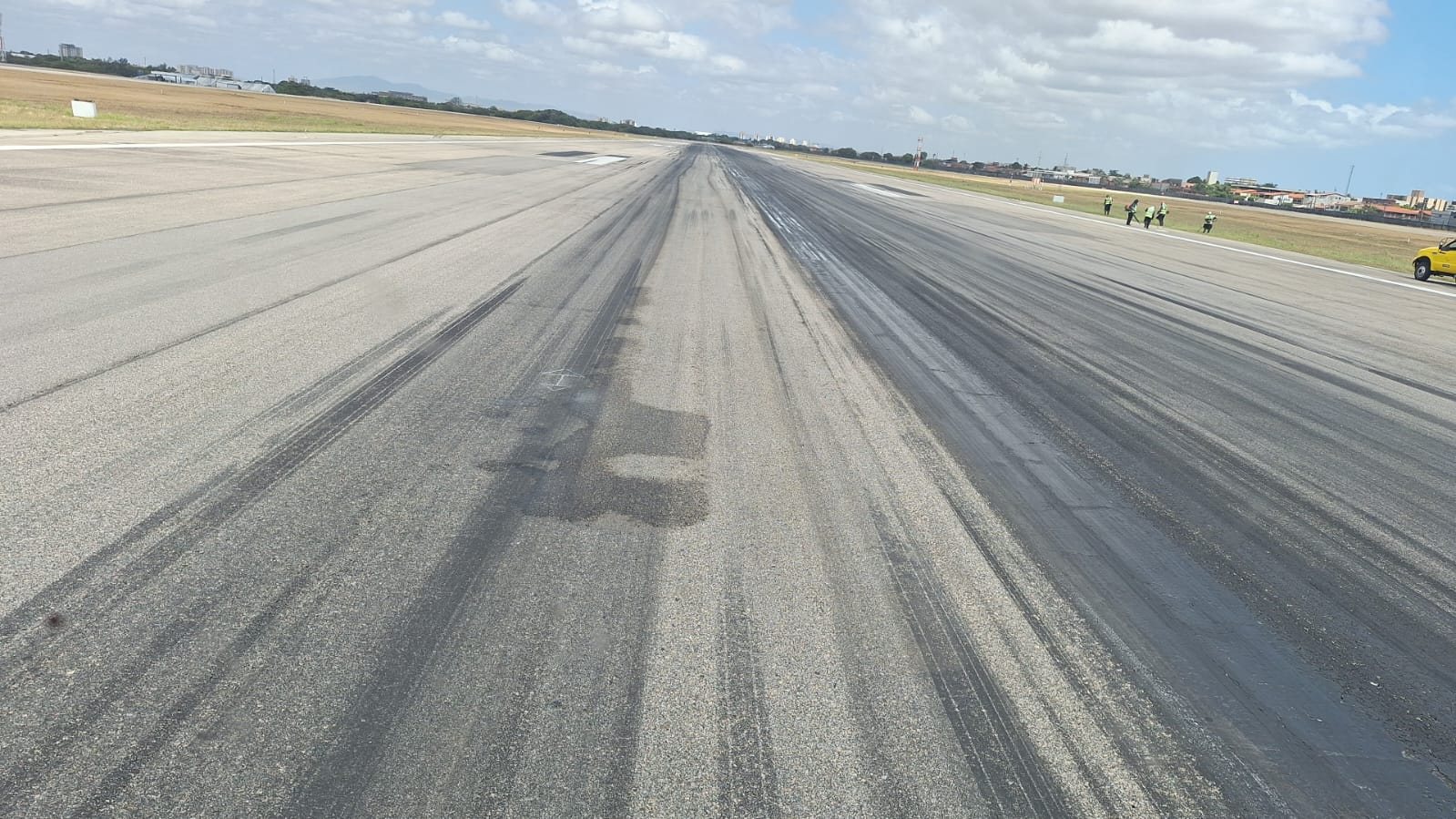
On every landing, the aircraft tire touches the pavement at high speed while still not rotating. Friction heats the rubber, which comes off and sticks to the runway. Landing after landing, these layers build up in the touchdown zone and cover the pavement texture, which is exactly what provides grip and water drainage.
The result is a smoother runway that loses friction, especially when wet. That is why rubber removal is a routine service at airports, required by ANAC regulations, and must be done at a frequency suited to the runway’s traffic.
Signs that it is time to remove rubber
- Friction measurements approaching the maintenance level.
- Dark, continuous marks in the touchdown zone, covering the texture and the markings.
- Pilot reports about braking or directional control on a wet runway.
- Routine deadline exceeded for the runway’s number of landings.
The reference frequency by number of landings is on the page Friction measurement: when and why to measure.
How Blueground removes rubber
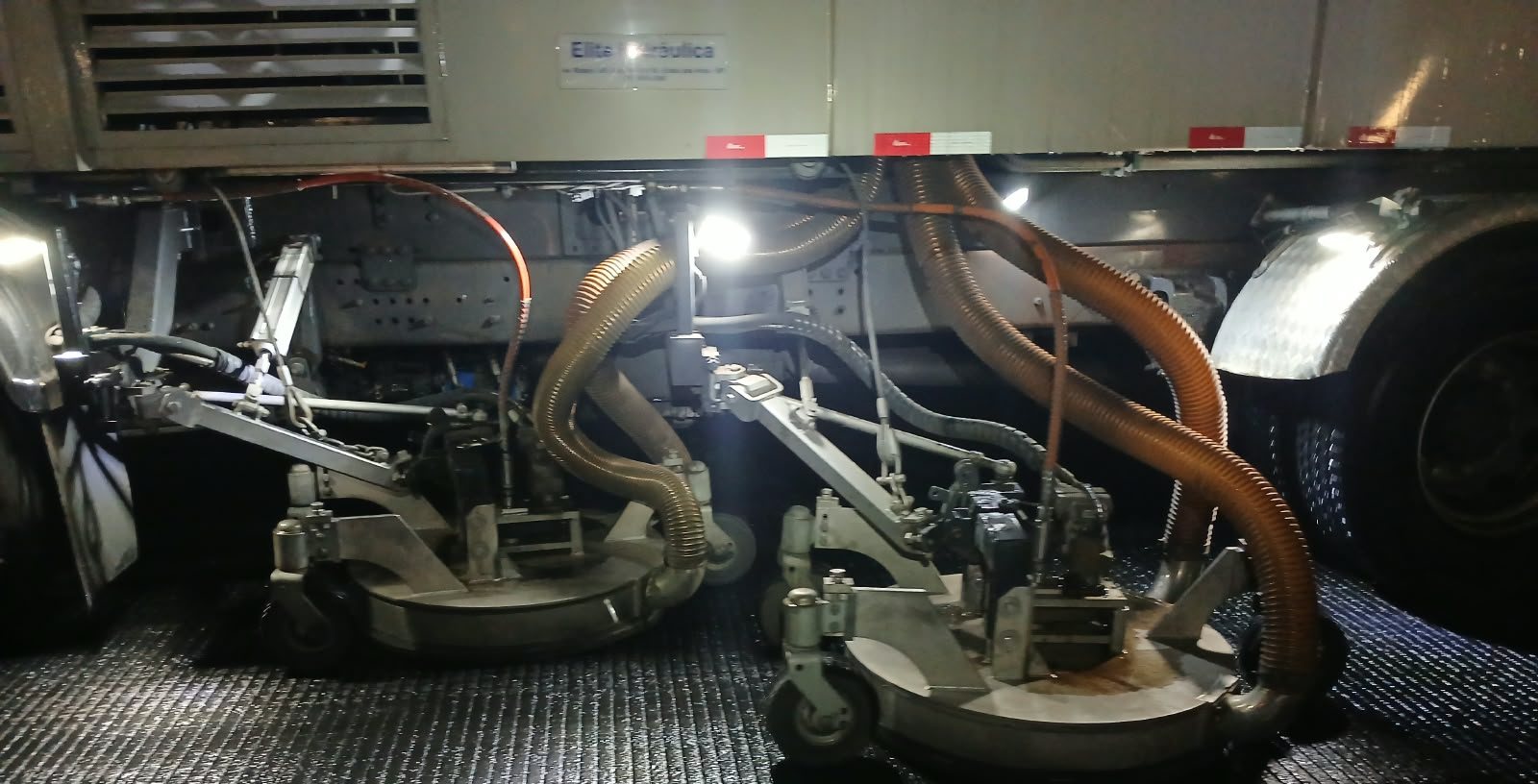
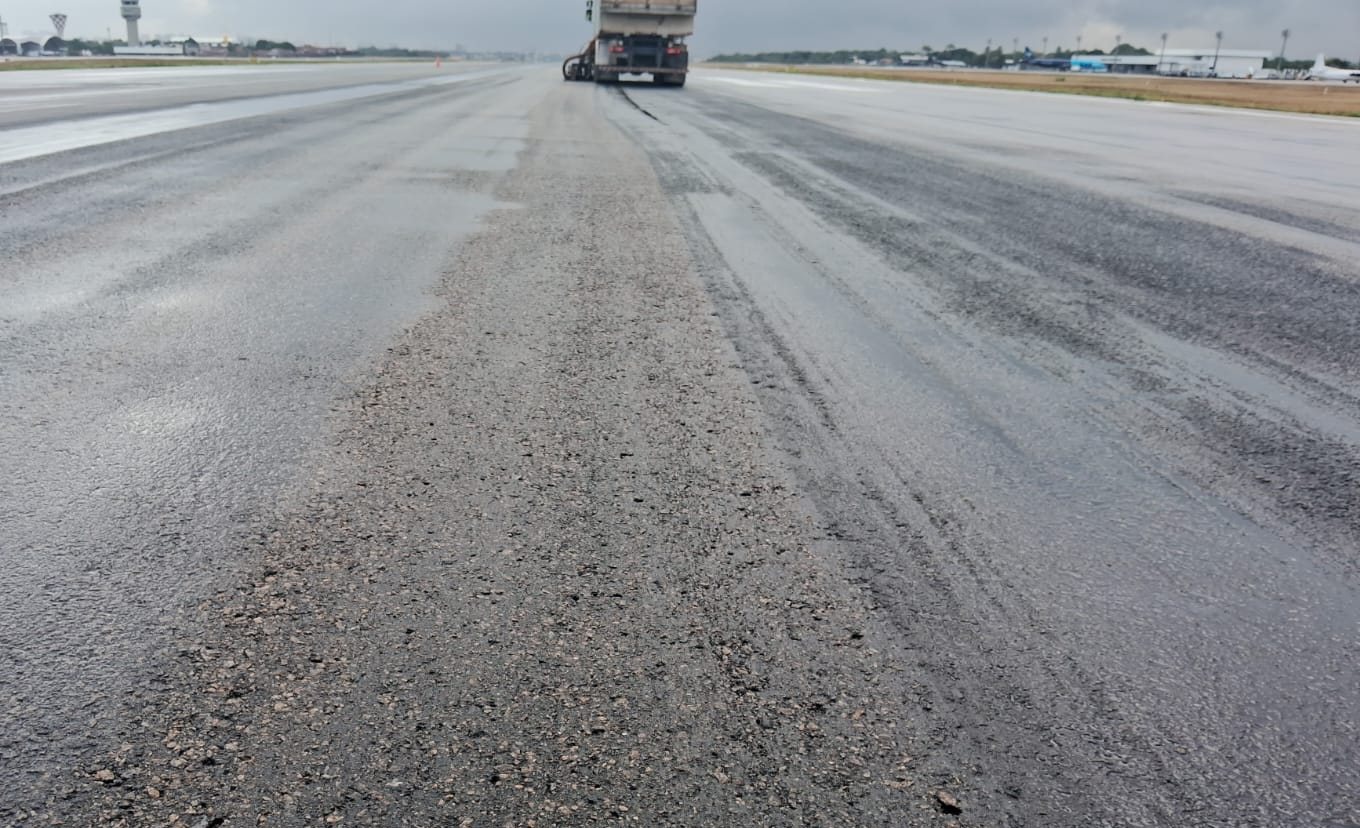
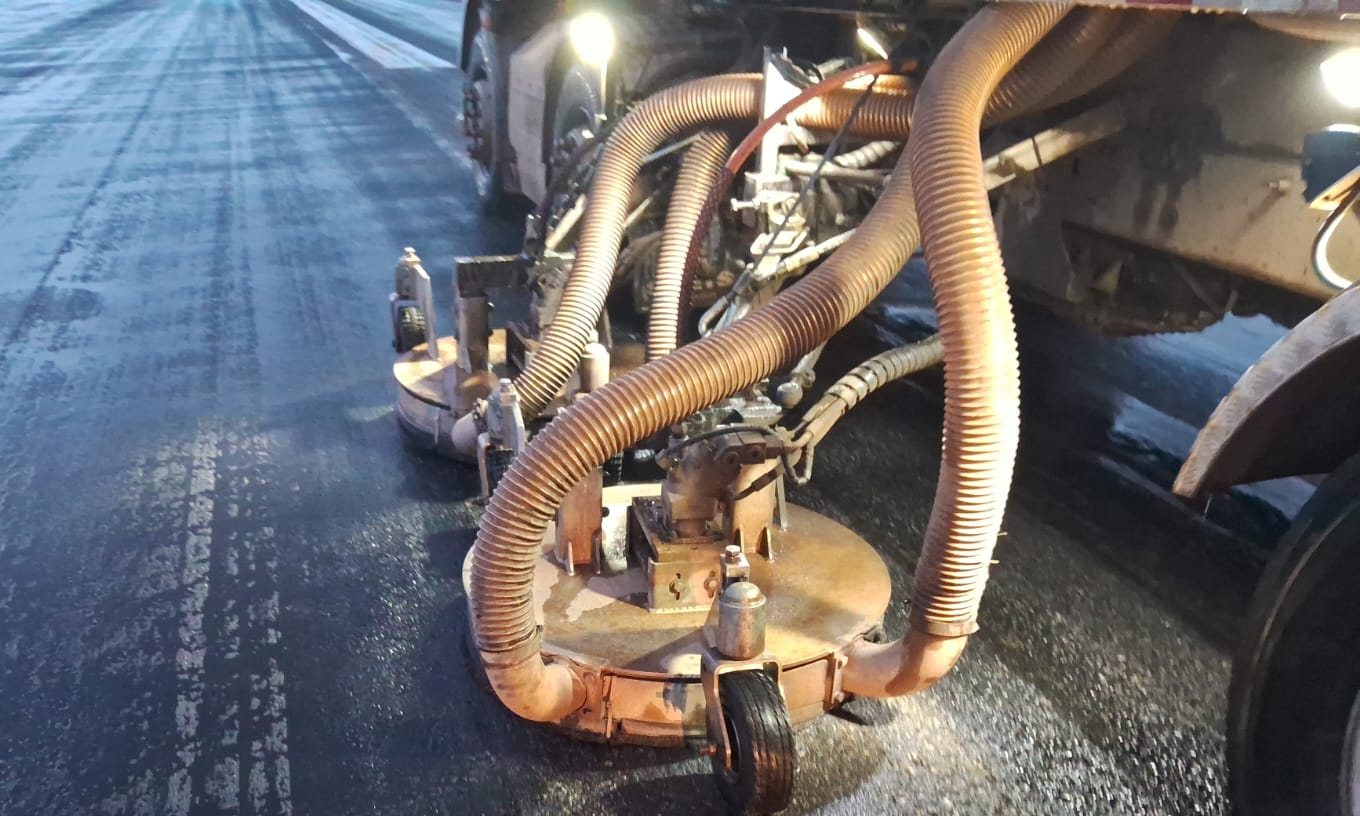
We use the ARC-1600, a high-pressure water jetting unit made by Smets Technology. Its rotating heads spray water jets onto the pavement while the suction system collects the water and debris, leaving the runway clean right after each pass.
- Initial assessment: friction measurement and runway inspection to define the sections and the intensity of the work.
- Planning with the airport: scheduling within the operating window, coordinated with the tower and operations.
- Removal: pressure, speed and heads adjusted to the pavement type, to remove the rubber without damaging the surface or the markings.
- Verification: a new friction measurement to prove that grip has been restored.
The complete package for your runway
Rubber removal, friction measurement and macrotexture testing work best together: the first restores grip, the other two prove the result. Blueground performs all three services, with a single team and a single report.
| Service | What it is for |
|---|---|
| Rubber removal | Restores pavement texture and grip in the touchdown zone. |
| Friction measurement | Shows the friction coefficient before and after the work, compared with the reference levels. |
| Macrotexture testing | Evaluates the pavement texture depth, which is linked to water drainage. |
See the ARC-1600 in operation
See Blueground's YouTube channel
Frequently asked questions
Does removal damage the pavement or the markings?
No. The ARC-1600 parameters are adjusted to the pavement type and the job, to remove rubber while preserving the surface and the markings.
Does the runway need to be closed?
The work is scheduled within the operating window agreed with the airport, usually during low-traffic hours, to reduce the impact on operations.
How long does it take?
It depends on the size of the rubber-covered area and the available windows. In our proposal, we present a step-by-step plan for your airport.
Do you serve my airport?
We serve airports all over Brazil, taking our team and equipment on site.