What the runway friction coefficient is
The friction coefficient shows how much grip the aircraft tire finds on the pavement. The higher the value, the better the braking and directional control during landing and takeoff, especially on a wet runway.
With use, this value drops. The rubber left by the tires on every landing covers the pavement texture, and oil, fuel and the surface’s own wear also reduce grip. Periodic measurement shows when this starts to compromise safety, before it becomes an operational risk.
Why measure
- Operational safety: a low-friction runway increases braking distance and the risk of aquaplaning and runway excursion.
- Compliance: ANAC’s RBAC 153 requires the aerodrome operator to periodically assess the runway’s friction characteristics.
- Data-driven maintenance decisions: measurement shows the right time to remove rubber or retexture the pavement, without spending too early or waiting too long.
- Proof of service: measuring before and after rubber removal shows the grip gained.
When to measure
The frequency depends on runway traffic: the more landings, the more rubber builds up. The table below shows the industry reference for daily jet landings per runway end.
| Daily jet landings (per runway end) | Friction measurement | Rubber removal |
|---|---|---|
| Fewer than 15 | Every year | Every 2 years |
| 16 to 30 | Every 6 months | Every year |
| 31 to 90 | Every 3 months | Every 6 months |
| 91 to 150 | Every month | Every 4 months |
| 151 to 210 | Every 2 weeks | Every 3 months |
| More than 210 | Every week | Every 2 months |
Reference: ICAO Airport Services Manual (Doc 9137, Part 2) and RBAC 153. Always confirm the frequency required for your aerodrome in the current version of the regulation.
Beyond the routine schedule, it is worth measuring after works and resurfacing, after rubber removal and whenever pilots report poor braking.
How Blueground measures
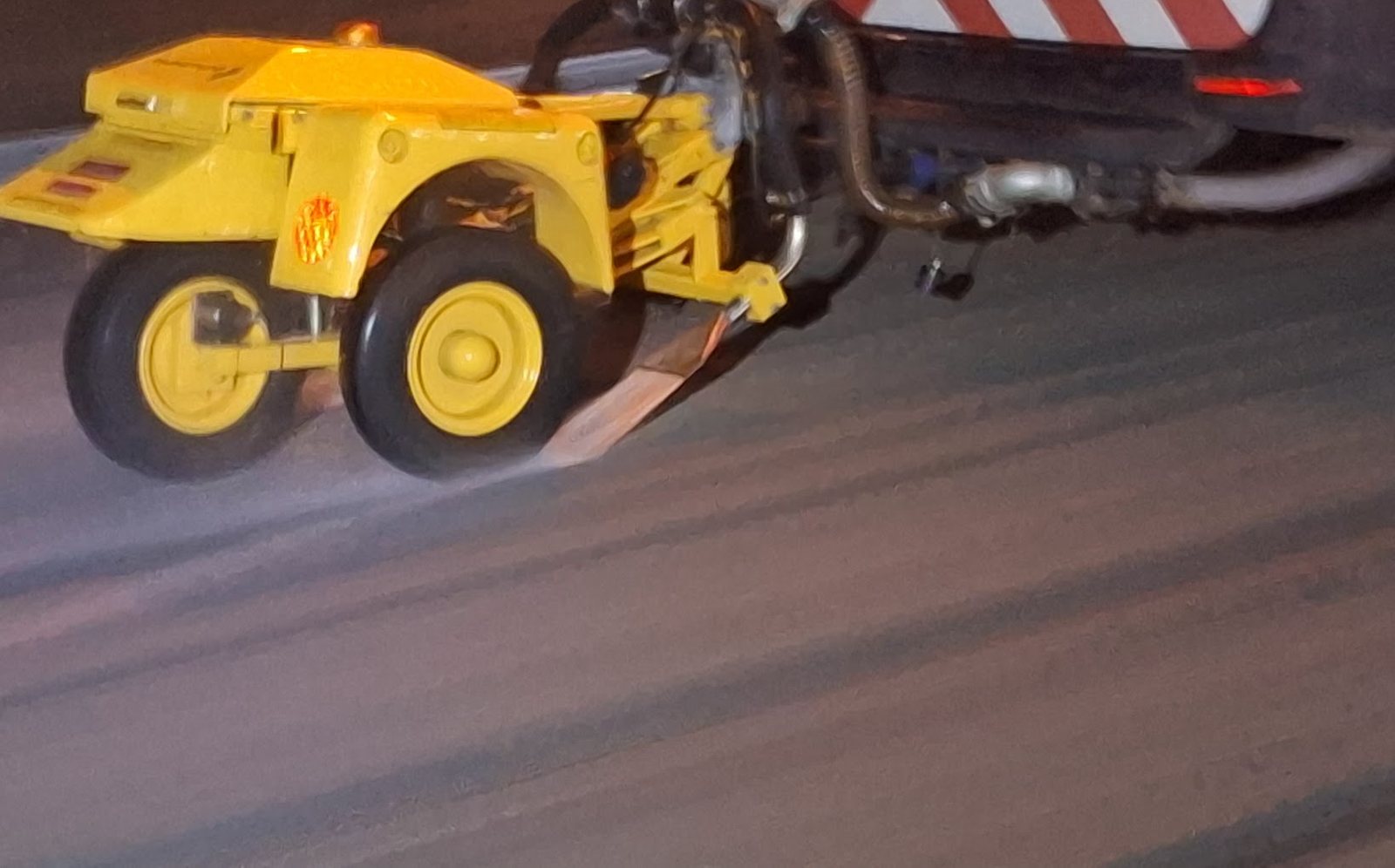
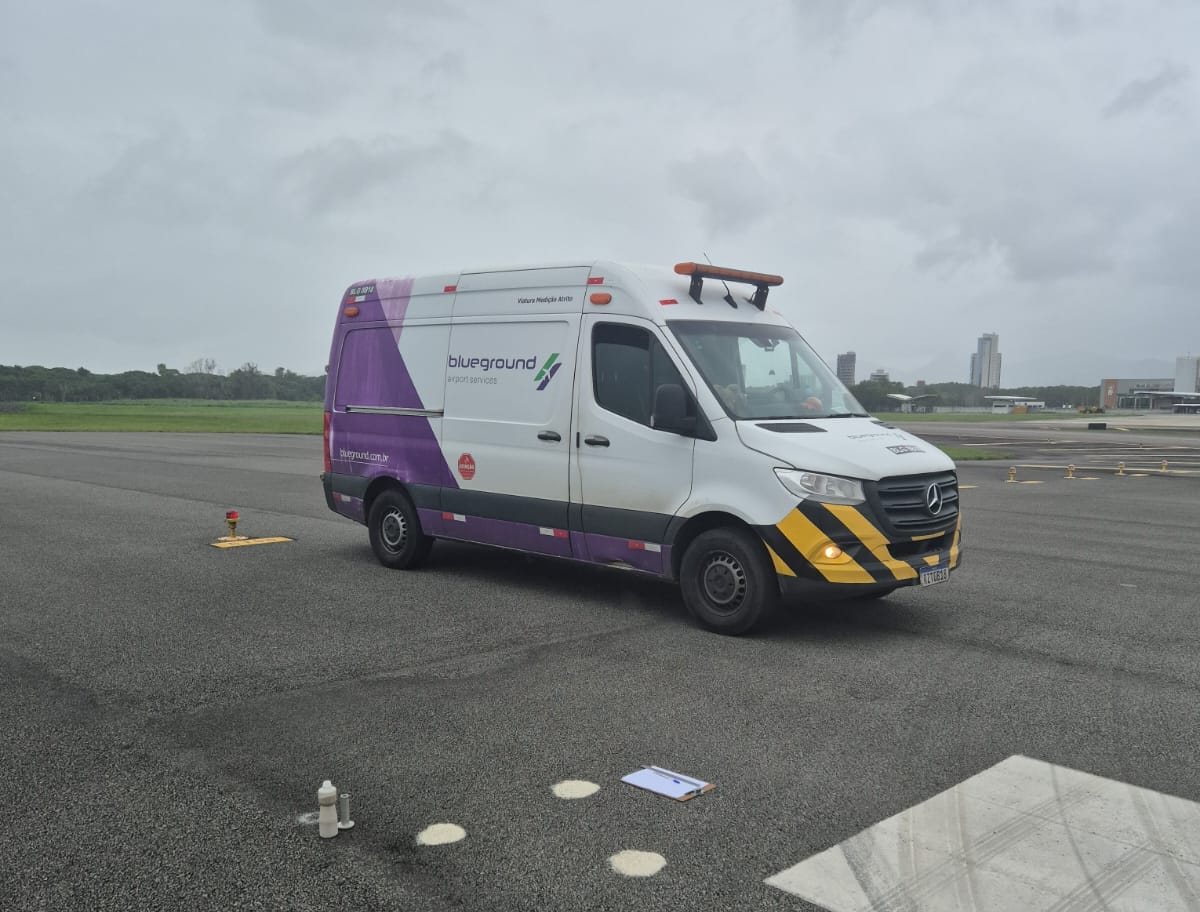
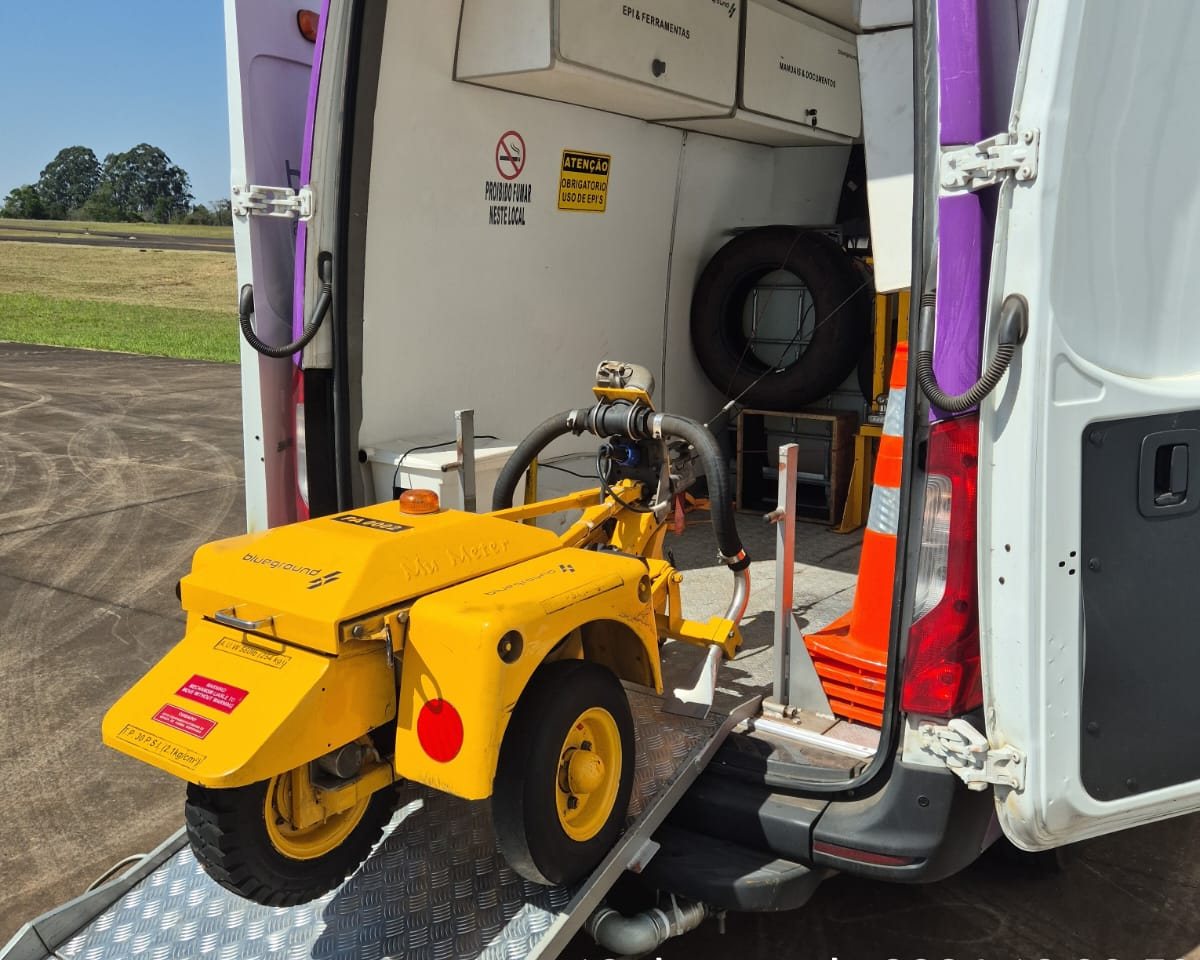
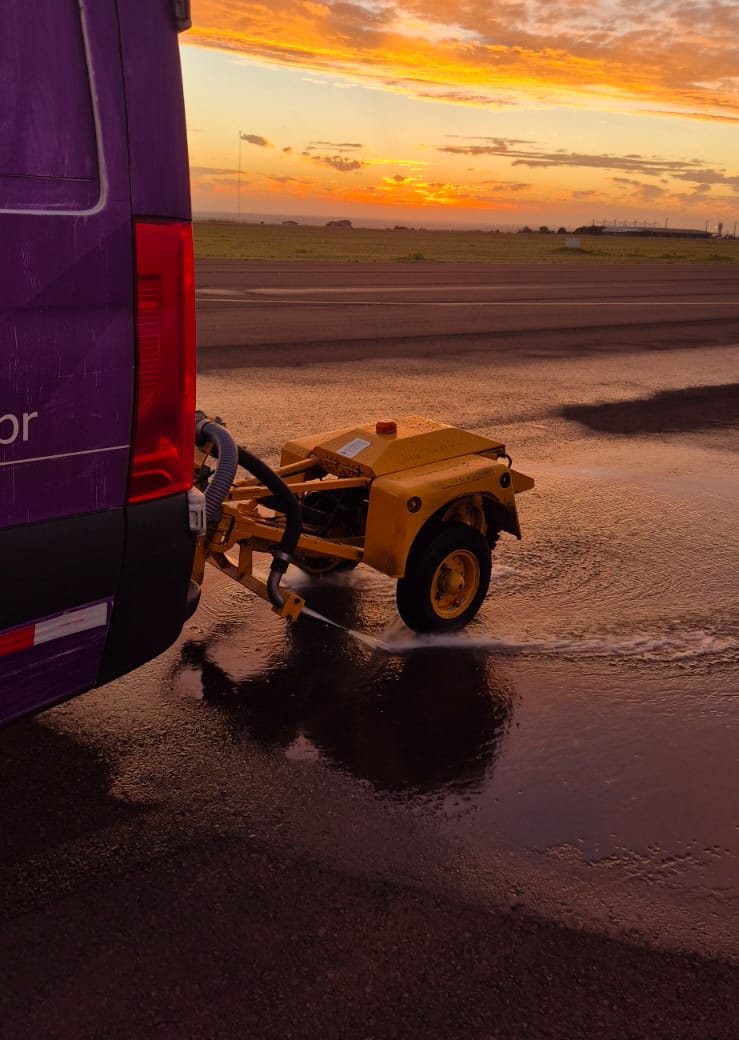
We use the Mu Meter, a British-made continuous friction measuring device, towed along the runway by a Blueground vehicle.
- Planning with the airport: we define the operating window, coordination with the tower and the sections to be measured.
- Wet runway test: the device applies a controlled film of water in front of the measuring wheel, simulating the most critical operating condition.
- Continuous measurement: the coefficient is recorded along the entire length, on the paths used by aircraft wheels, on each side of the runway centerline.
- Analysis and report: the results are compared with the reference levels and delivered in a technical report, with a maintenance recommendation.
Reference levels
The results are compared with two limits: the maintenance planning level, below which maintenance should be planned, and the minimum friction level, below which the runway requires immediate action. For the Mu Meter, the ICAO references are:
| Test speed | New runway (design) | Maintenance planning level | Minimum friction level |
|---|---|---|---|
| 65 km/h | 0.72 | 0.52 | 0.42 |
| 95 km/h | 0.66 | 0.38 | 0.26 |
ICAO reference values (Annex 14) for the Mu Meter with a 1 mm water film. The limits that apply to your aerodrome are those in ANAC’s current regulations.
What you receive
- Friction coefficient along the entire runway, by section and by side of the centerline.
- Comparison with the maintenance and minimum levels.
- Technical recommendation: keep monitoring, schedule rubber removal or intervene on the pavement.
- Records to document compliance for inspections.
See the measurement in operation
See Blueground's YouTube channel
Frequently asked questions
Does the runway need to be closed during measurement?
Measurement is done in a window agreed with the airport and the tower, usually during low-traffic hours, so it does not interfere with operations.
How are friction measurement and rubber removal related?
Measurement shows when friction is approaching the maintenance level; rubber removal restores grip. Ideally, measure before and after removal to prove the result.
Does Blueground serve airports in any region?
Yes. We serve airports all over Brazil, taking our team and equipment on site.
Besides friction, do you assess pavement texture?
Yes. We carry out macrotexture and microtexture tests, which complement friction measurement in the runway assessment.